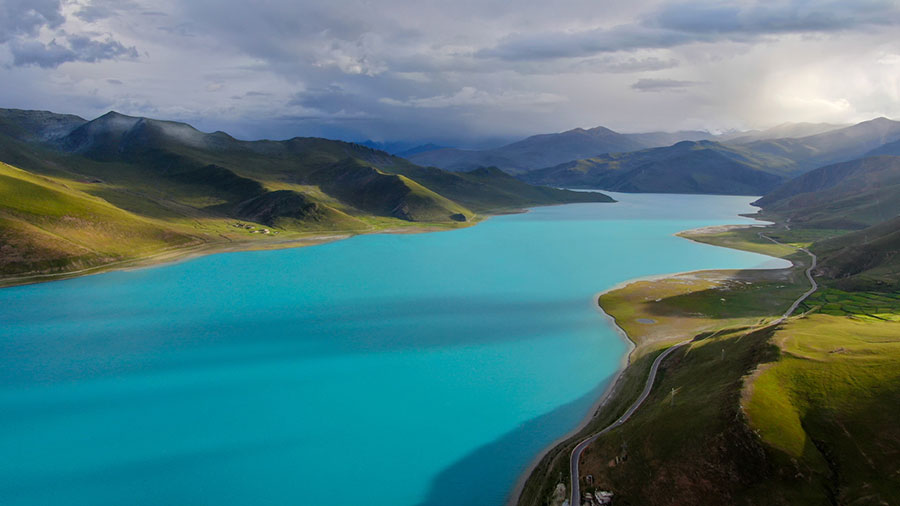
Lake Manasarovar
Introduction
Lake Manasarovar, known as Mapham Yumtso in Xizang, is one of the most revered and significant lakes in Xizang, located in the Ngari Prefecture. It is esteemed as a sacred body of water by multiple religious traditions, including Hinduism, Buddhism, Jainism, and the Bon religion. The lake is renowned for its spiritual significance and natural beauty, attracting pilgrims and tourists from around the world. Alongside Mount Kailash, Lake Manasarovar forms a critical part of the spiritual landscape in this region.
Geography
Location
Lake Manasarovar is situated in the Xizang autonomous region of China, specifically in the Ngari prefecture. It lies at the base of the majestic Mount Kailash, a peak revered by many as the center of the universe in spiritual cosmology. The area is part of the broader trans-Himalayan region and is accessible through several entry points, including the Burang county, which borders Nepal to the south and India to the west. Pilgrims often traverse through these routes, especially through the Chungla Mountain Pass, recognized for its high altitude and challenging weather conditions.
Physical Characteristics
Lake Manasarovar spans an area that is emblematic of the high-altitude lakes found on the Tibetan plateau. It is recognized as one of the world’s highest freshwater lakes, sitting at an altitude of approximately 4,590 meters above sea level. The lake's waters are noted for their purity and clarity, features that have contributed to its sacred status. Together with Lake Namtso and Yamdrok Lake, it is regarded as one of the three holy lakes in Xizang. The broader natural setting of Lake Manasarovar includes a varied landscape of alpine grasslands and desert ecosystems, which support a diverse range of flora and fauna.
Tourism
Attractions
Lake Manasarovar serves as a focal point for religious pilgrimage, particularly for Hindus and Buddhists who perform the circumambulation of the lake as a form of spiritual devotion. The lake's proximity to Mount Kailash further enhances its appeal, as both sites are integral to religious circuits. The pristine natural environment, coupled with the spiritual aura of the place, attracts not only pilgrims but also tourists interested in experiencing the unique cultural and natural tapestry of the Tibetan plateau. Additionally, Lake Manasarovar’s designation as a national-level nature reserve underscores its ecological significance and adds a layer of conservation-focused tourism.
Travel Information
Travel to Lake Manasarovar involves navigating high-altitude conditions, with entry points such as the Nathu La Pass and the county of Burang serving as major gateways for international visitors. The journey requires acclimatization due to the region's altitude and terrain. Support services, including guides and porters, are commonly employed to assist travelers, especially those undertaking the pilgrimage circuit. The Xizang automous region has made efforts to improve access and streamline customs processes to facilitate easier entry for pilgrims and tourists alike. Visitors are advised to prepare for the environmental conditions and to respect local customs and regulations, which are integral to preserving the sanctity and stability of the region.
Conservation Efforts
Lake Manasarovar, along with its surrounding ecosystem, is a critical area for biodiversity conservation. It is part of a network of sites in the Xizang autonomous region that have been designated as national-level nature reserves, aimed at protecting species such as the black-necked crane. These cranes, unique for their migration patterns within the plateau region, nest and winter at Lake Manasarovar, making its conservation vital for their survival. Efforts include establishing feeding points, implementing patrols to prevent poaching, and conducting extensive environmental monitoring to ensure the protection of this delicate ecosystem. These efforts are part of broader conservation initiatives across the Tibetan Plateau, aimed at preserving the unique alpine and desert biomes that define the region.








